
How to Safely Watch the 2026 Solar Eclipse (Eye Protection Guide)
 Watching a solar eclipse is a breathtaking experience that can leave a lasting impression on anyone, but it is also an activity that requires responsibility. Many people wonder how to watch a solar eclipse without damaging your eyes, and the answer is simple but non-negotiable: proper protection is the only way to enjoy the phenomenon without risking your vision.
Why is eye protection essential during a solar eclipse?
Even when the Moon covers a large portion of the Sun, the radiation it emits remains strong enough to cause permanent damage. Looking directly at the Sun without proper eye protection can result in a retinal burn known as solar retinopathy. The most dangerous aspect is that this damage does not cause immediate pain, meaning you could be harming your vision without realizing it at the moment.
Safe solar eclipse glasses: The ISO 12312-2 standard
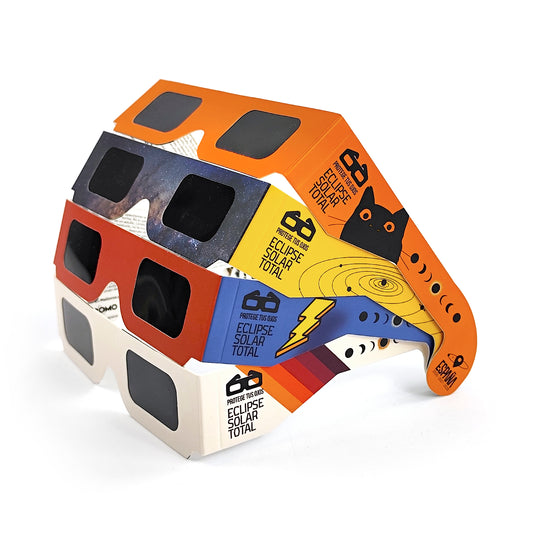
The most effective and expert-recommended way to observe the phenomenon is by using safe solar eclipse glasses. Regular sunglasses are not suitable, no matter how dark they are. Proper eclipse glasses are made with special polymers that filter out 99.99% of visible light and block all harmful ultraviolet and infrared radiation.
To ensure your solar eclipse lenses are safe, they must comply with the international ISO 12312-2 standard. This certification is the only guarantee that the filter has passed the required safety tests for direct solar observation.
Ready to experience the eclipse with complete peace of mind?
Enjoy this unique spectacle without any worries. Our certified eclipse glasses ensure safe and comfortable viewing.

Using solar filters for telescopes
If you plan to use optical instruments, extra caution is required. Never use a telescope, binoculars, or camera without a proper solar eclipse filter securely placed on the front (objective lens). Looking through optics that concentrate sunlight without the correct filter will cause instant eye damage.
Make sure your solar eclipse glasses are in perfect condition before the event. If you notice any scratches or damage to the filter, discard them immediately, as your eye safety depends on the integrity of the material.
What happens if you look at an eclipse without protection?
This is one of the most common questions. Eye damage during a solar eclipse is real and may appear as a dark spot in the center of your vision, blurred sight, or color distortion. Since the center of the retina is the most sensitive area, any loss of clarity directly affects daily activities such as reading or driving.
Remember that it is only safe to look at a solar eclipse without glasses during the brief moments of totality—and only if you are within the path of totality. If in doubt, always keep your eclipse glasses on.
Frequently Asked Questions (FAQ)
Can sunglasses be used to watch a solar eclipse?
Absolutely not. Sunglasses are not safe for solar eclipse viewing. They only reduce visible light but do not block harmful ultraviolet and infrared radiation. Only certified solar eclipse glasses provide safe protection.
Where can I buy solar eclipse glasses?
If you are looking for solar eclipse glasses, it is best to purchase them from specialized astronomy stores that guarantee ISO certification. At Astromo, all our solar viewing glasses strictly meet international safety standards.
Can I make DIY eclipse glasses?
Homemade DIY eclipse glasses or improvised filters such as X-rays, smoked glass, or CDs are strongly discouraged. These methods do not block invisible radiation and may give a false sense of safety while causing irreversible eye damage.
More cosmic finds
-
CERTIFIED SOLAR ECLIPSE GLASSES - THE ECLIPSE CUARTET
Regular price €15,00 EURRegular price -
CERTIFIED SOLAR ECLIPSE GLASSES - STARMAN MODEL
Regular price €15,00 EURRegular price -
CERTIFIED SOLAR ECLIPSE GLASSES - 1984 MODEL
Regular price €15,00 EURRegular price -
CERTIFIED SOLAR ECLIPSE GLASSES - COSMOS MODEL
Regular price €15,00 EURRegular price


- Choosing a selection results in a full page refresh.
- Opens in a new window.

Support
Typically replies within an hour
How can I help you?